

Discovery Tours
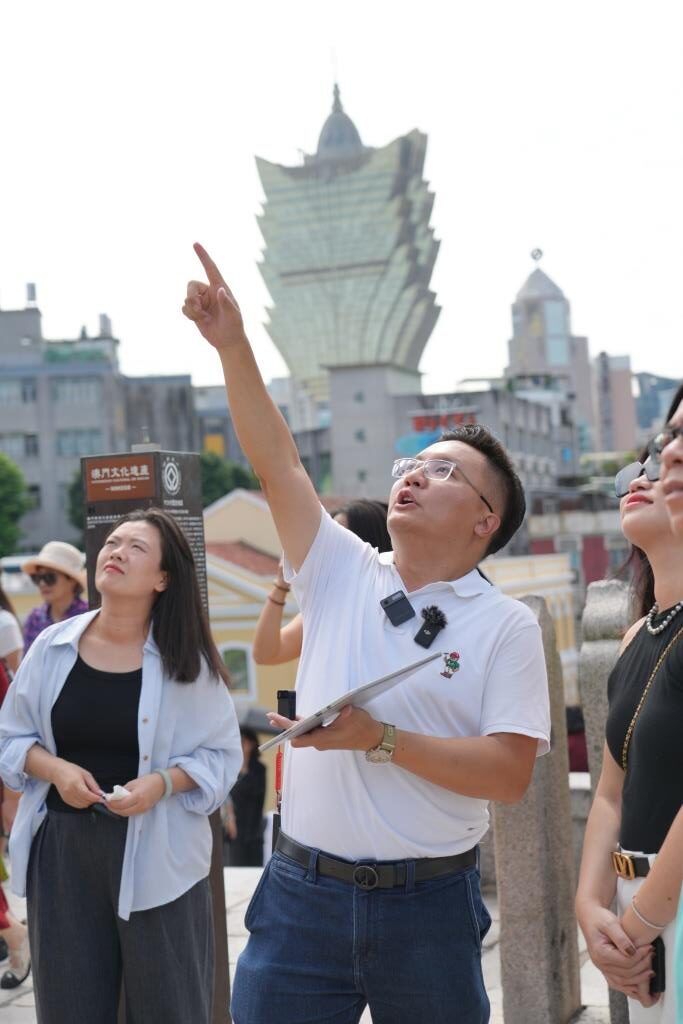
The Historic Centre of Macao was inscribed on UNESCO’s World Heritage List on July 15, 2005, becoming China’s 31st World Heritage Site. Hotel Central, in collaboration with Macao’s renowned travel agency Explorer Cultural Tourism, has launched the “Discover the Quaint Small Town” Historic City Walking Tour to enhance public understanding of Macao’s cultural heritage through professional guided activities. The tour aims to foster a love for local culture, promote awareness of cultural preservation, and provide new perspectives and momentum for the sustainable development of the Historic Centre. It encourages participants to appreciate the history of heritage buildings while actively considering how to balance conservation with modern urban development, offering fresh ideas for Macao’s sustainable future.
The tour takes the form of a walking exploration of Macao’s World Heritage sites, covering areas such as the Ruins of St. Paul’s, Monte Fortress, St. Anthony’s Church, and Rua dos Ervanários. Through expert commentary, participants can fully immerse themselves in the unique charm and profound heritage of Macao’s Historic Centre.
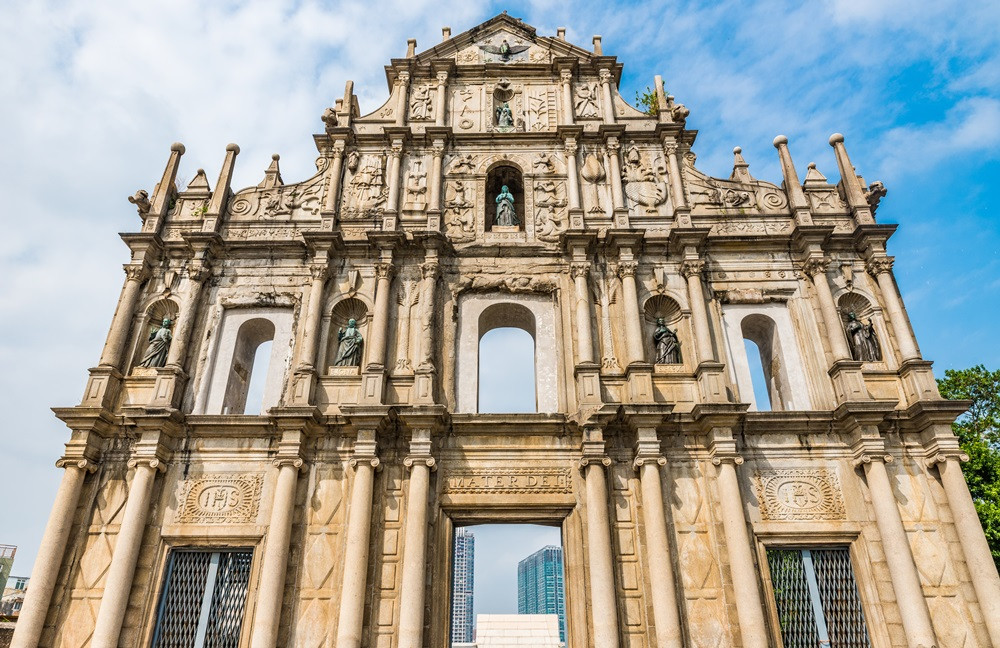
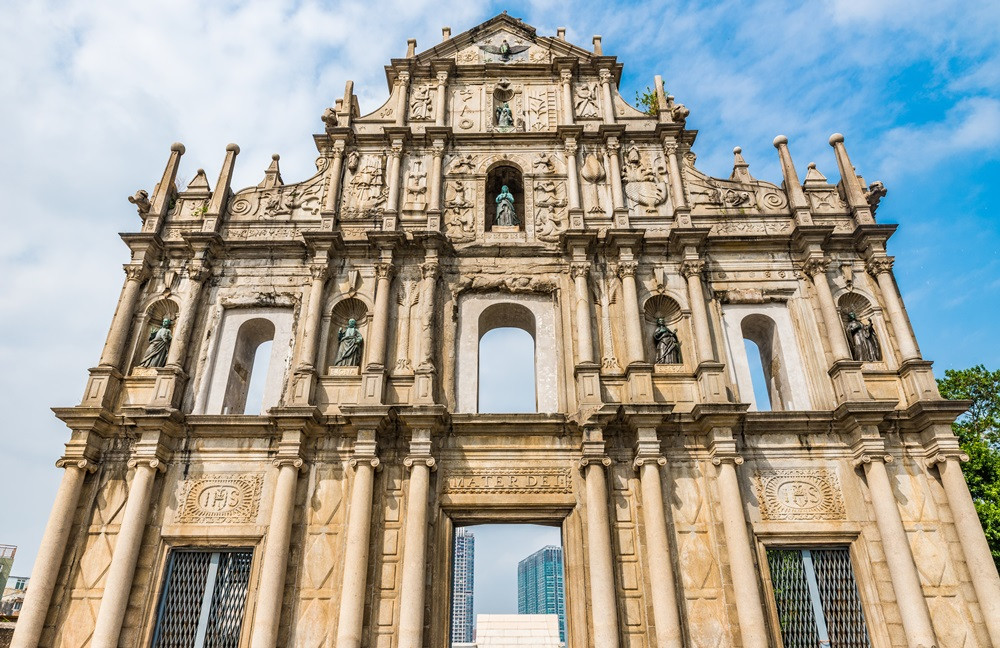
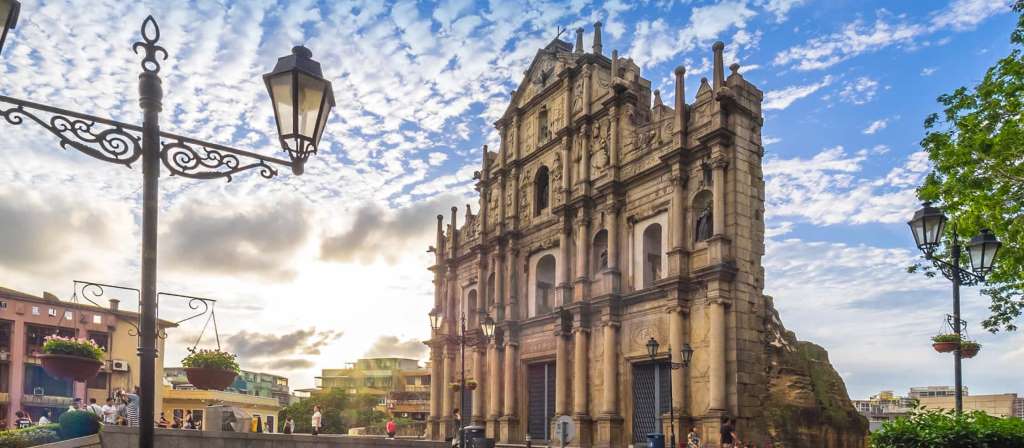
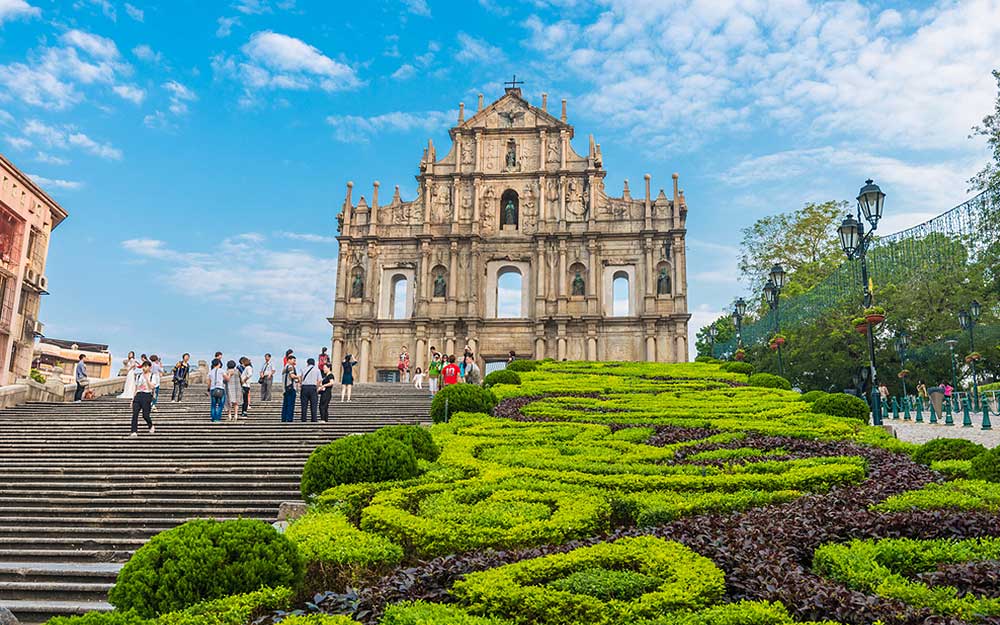
The Ruins of St. Paul’s refers to the façade of what was originally the Church of Mater Dei built in 1602-1640 and the archaeological remains of St. Paul’s College, which stood adjacent to the Church, both destroyed by a fire in 1835. The facade of the Ruins of St. Paul’s measures 23 metres across and 25.5 metres high. The design of this church façade is unique in the world, as it is one that integrates oriental decorative motifs on a western Baroque-Mannerist façade. The façade is sub-divided into five horizontal levels that have an ascending reading order. The insignia of the Jesuits is inscribed above the doorways of the side entrances, while the Latin name of the Church of Mater Dei meaning the “Mother of God” is engraved above the central entrance. On the level above the entrance are four bronze statues of Jesuits saints, Francisco de Borja, Ignatius Loyola, Francis Xavier and Luís Gonzaga. The statue of the Virgin Mary is found in the next level up, flanked by a seven-headed hydra, a skeleton, a Portuguese merchant ship and a winged demon, with various inscriptions in Chinese that convey biblical messages. At both ends of this level are Chinese lions jugging out the façade below the pinnacles. On the next upper level, the statue of Jesus Christ as a child is located, surrounded by the Passion tools. A dove representing the Holy Spirit is found at the centre of the triangular pediment and a Latin cross crowns the ensemble. The overall composition presents a fusion of different influences, on a global, regional and local scale.
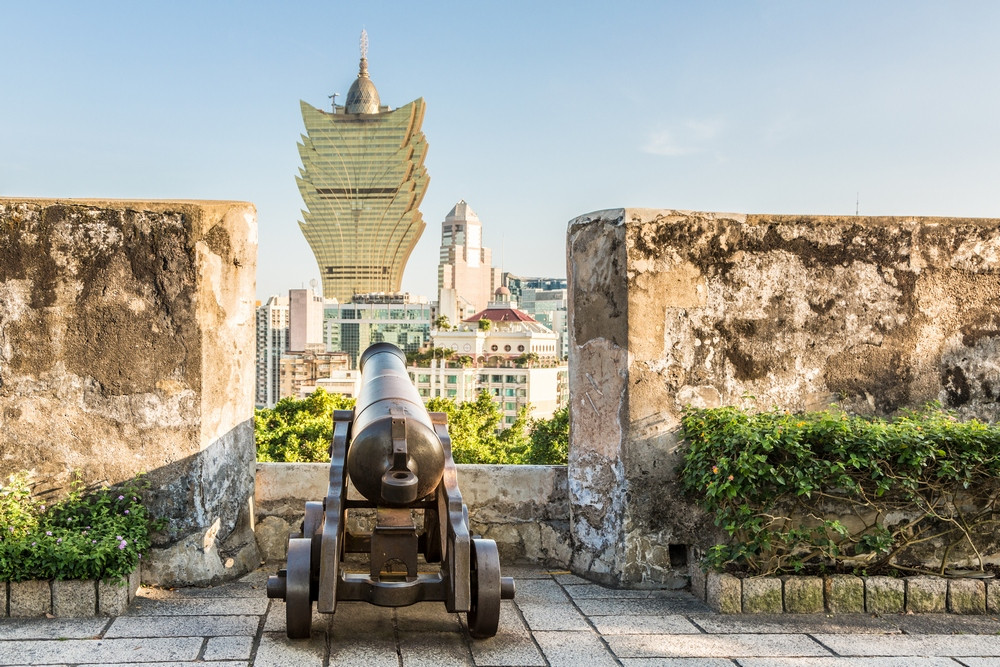
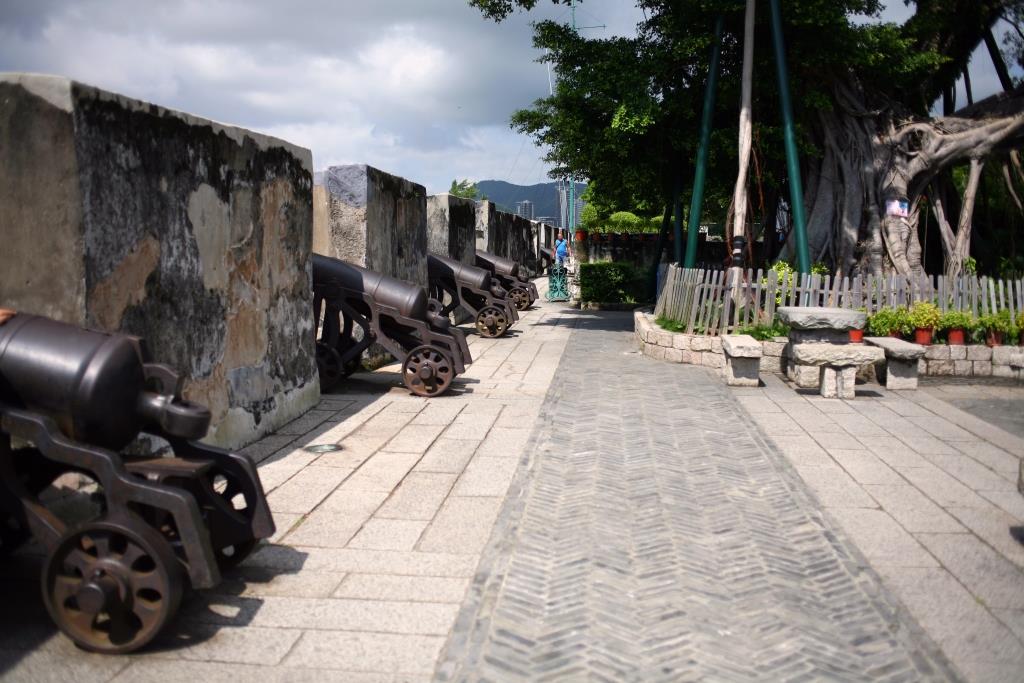
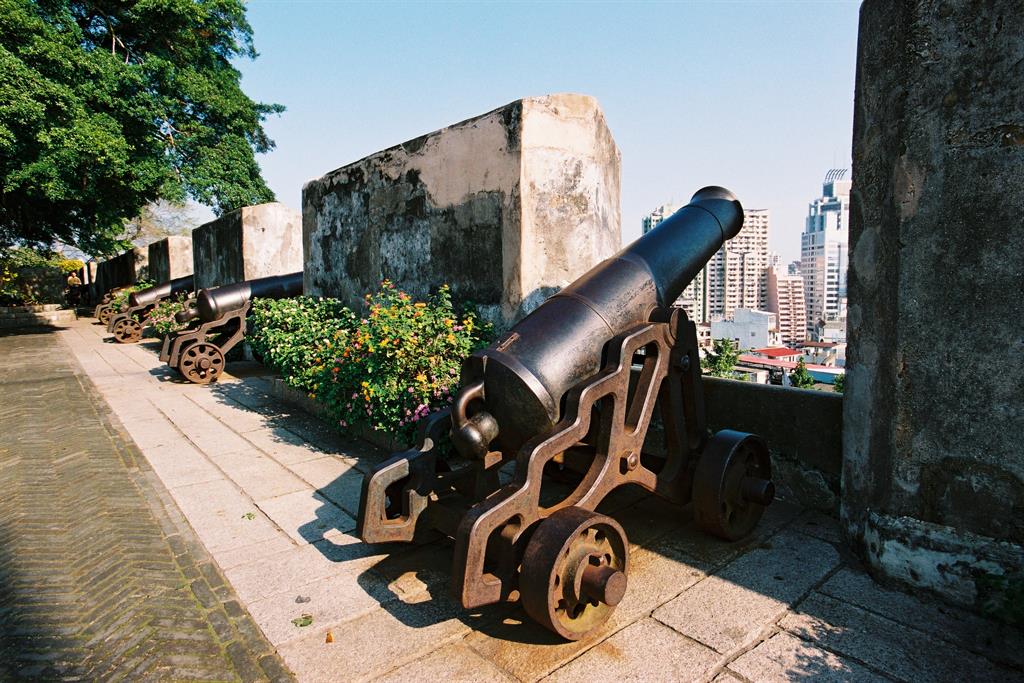
Built by the Jesuits, from 1617 to 1626, this was the city’s principal military defence structure and was crucial in successfully holding off the attempted Dutch invasion of Macao in 1622. It was built on top of Mount Hill, strategically located in the centre of the Macao Peninsula, watching over the city in all directions. The fortress is in the shape of an irregular trapezoid that covers an area of approximately 8000 square metres. In the past, it was equipped with cannons, military barracks, wells and an arsenal that held sufficient ammunition and supplies to endure a siege lasting up to two years. The walls are 3.7 metres wide at the base, 9 metres high narrowing upwards to 2.7 metres wide at the top. The parapets were crenulated for the installation of 32 cannons and the two corners of the southeast wall have watchtowers. There are no weapons facing mainland China, indicating that the fortress was only built for defense against attacks from the sea. In 1965 a weather observatory was installed at the site and the fortress was demilitarized in 1976. In 1998 the Macao Museum was installed at the site.
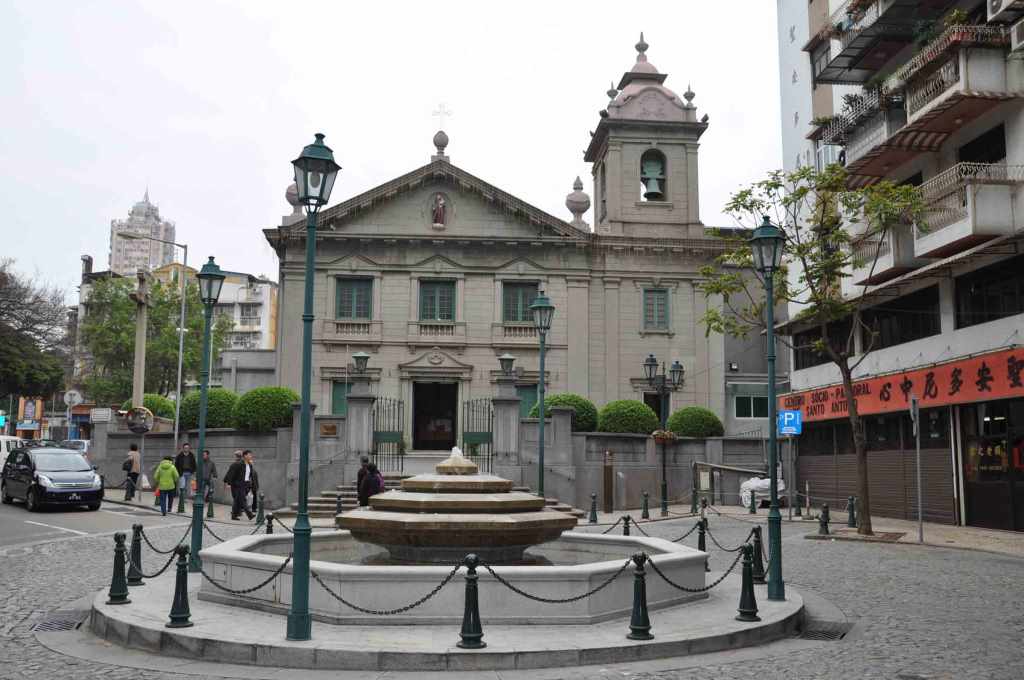
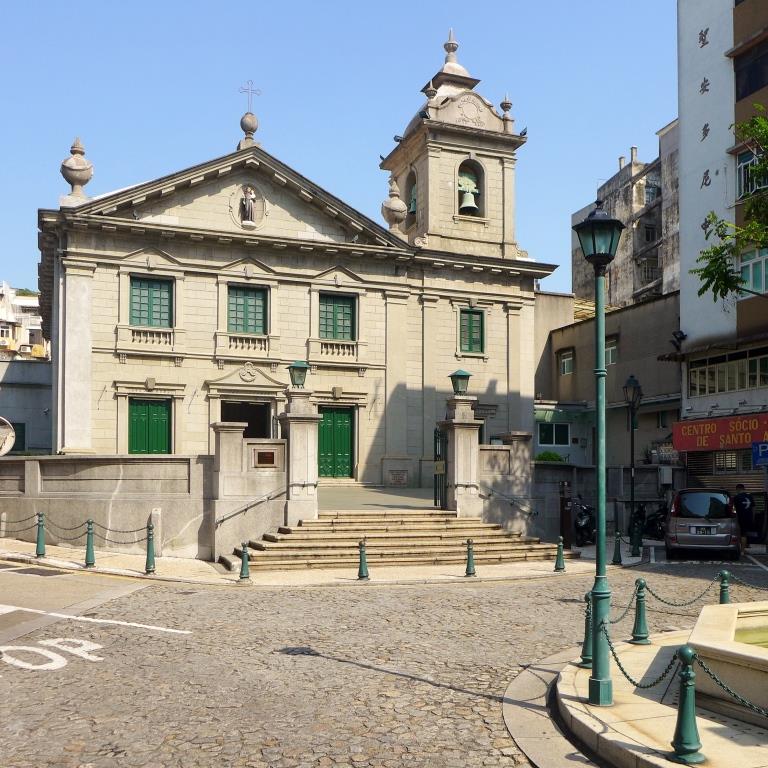
First built before 1560, this is one of the oldest churches in Macao, also marking the site where the Jesuits first set up their original headquarters in the city. The church was rebuilt in 1875, when it acquired its present-day configuration. In 1930, the building’s exterior was covered with a grainy “shanghai-plaster”. The church has a neo-classical façade and Baroque influenced interior, exemplified in the elaborate design of the main altar. In the past, this church was very popular among the local Portuguese community, particularly for wedding ceremonies, giving rise to the Chinese name of Fa Vong Tong, meaning “Church of Flowers”.
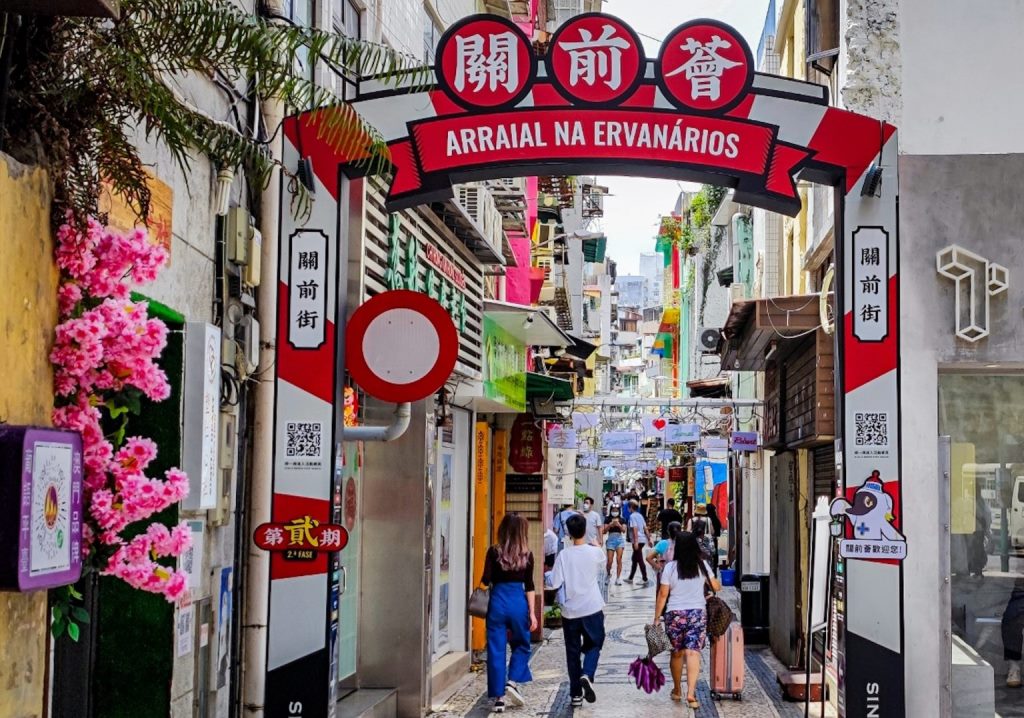
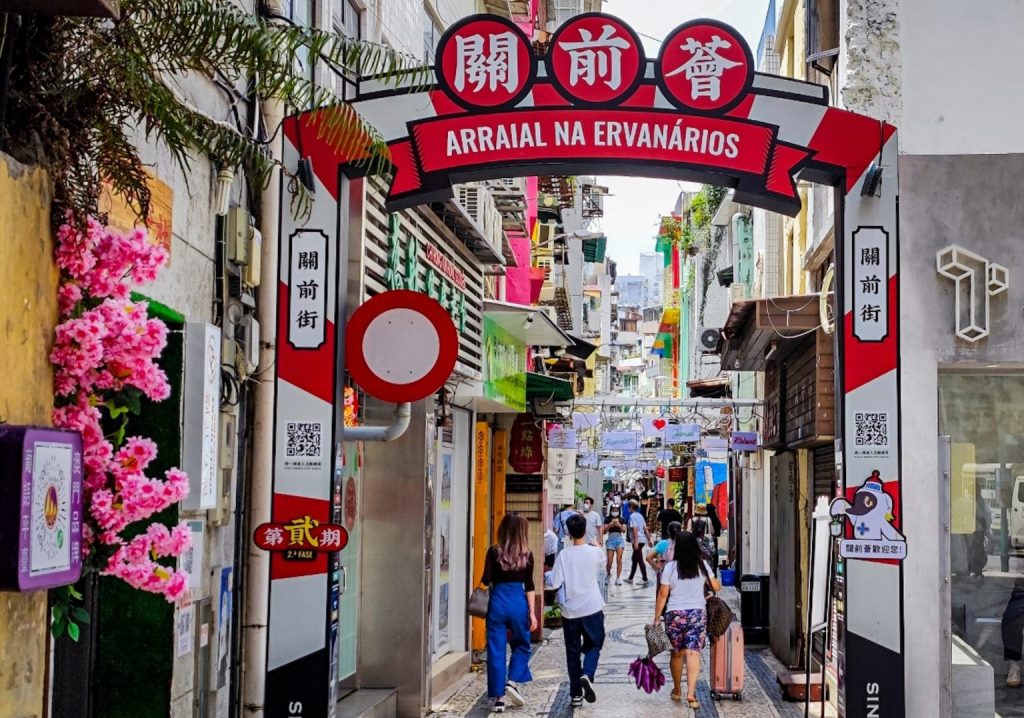
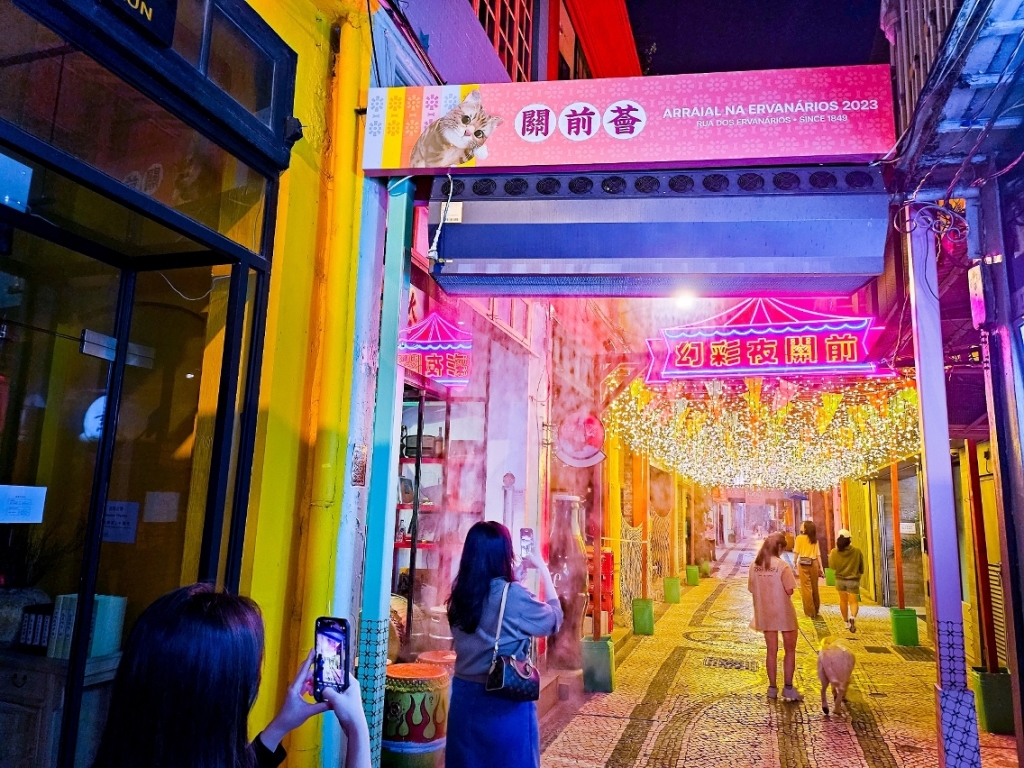
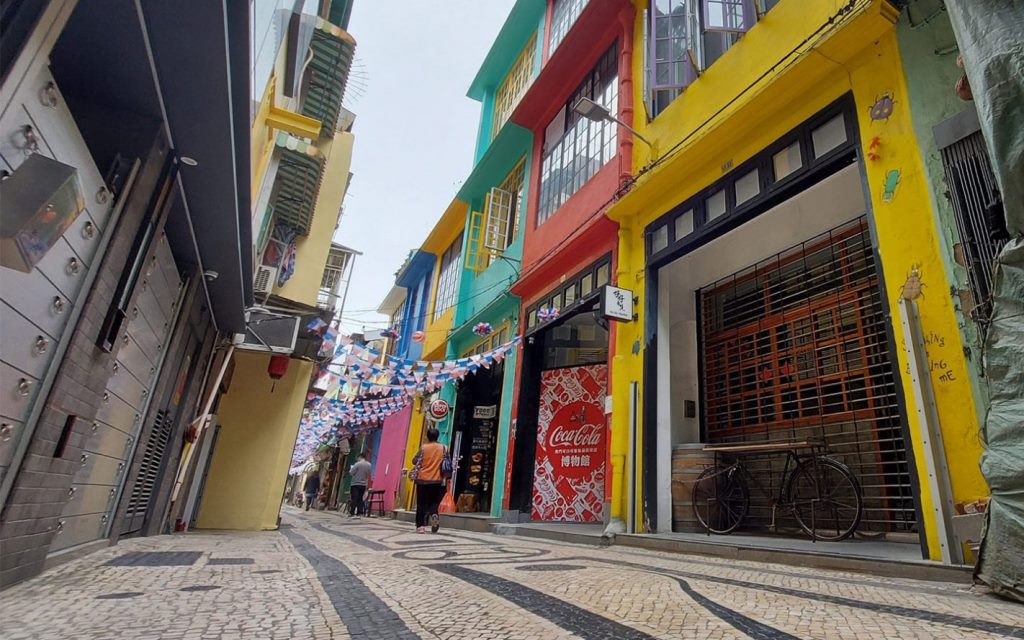
The Chinese name of Rua dos Ervanários was named after customs services that used to managed Macao’s foreign trade. Nowadays, this area has been developed into a unique old street. This area remains its traditional local industries, such as shops selling incenses, second-hand goods and antiques, and others. Some shops have been refurbished into specialty coffee shops and cultural and creatives shops. Occasional activities and cultural-creative flea markets are held in aim to attract tourist to visit.